Is Busan Worth Visiting in 2026? Why 'Busan Sickness' Is Trending
Short version: foreign visitor numbers to Busan are up 46.1 percent this year, and the reason has an actual nickname. The Korea Times reported this morning that 6,609 flights ran between Busan and Taiwan through July alone, already matching all of 2024's total and hitting 82.9 percent of 2025's, carrying 1.14 million passengers. Taiwanese travelers have coined a term for the craving to go back: "Busan sickness", and Busan's own tourism board has leaned into it, running a "Busan Fever Healing Promotion" with travel platform KKday.
If you're used to treating Busan as a Seoul day trip, or skipping it entirely, this is the year that assumption gets tested.
The Numbers Behind "Busan Sickness"
Taiwan is the single biggest source of Busan's foreign visitors right now: about 605,000 people through July, according to Seoul Economic Daily, ahead of China's 594,000, Japan's 340,000, and the U.S.'s 259,675. Total foreign arrivals hit 2,927,674 over that same seven months, a 46.1 percent jump from 2025 that outpaces the national tourism growth rate of 21.3 percent by more than double. July alone brought 507,045 visitors, beating June's already-record 484,057.
Here's the number that matters most if you're planning a trip: of the roughly one million people who landed at Gimhae International Airport through June, 50.2 percent stayed in Busan and never went near Seoul. Only 1.9 percent continued on to the capital. For a lot of these travelers, Busan isn't a side trip anymore. It's the whole itinerary.
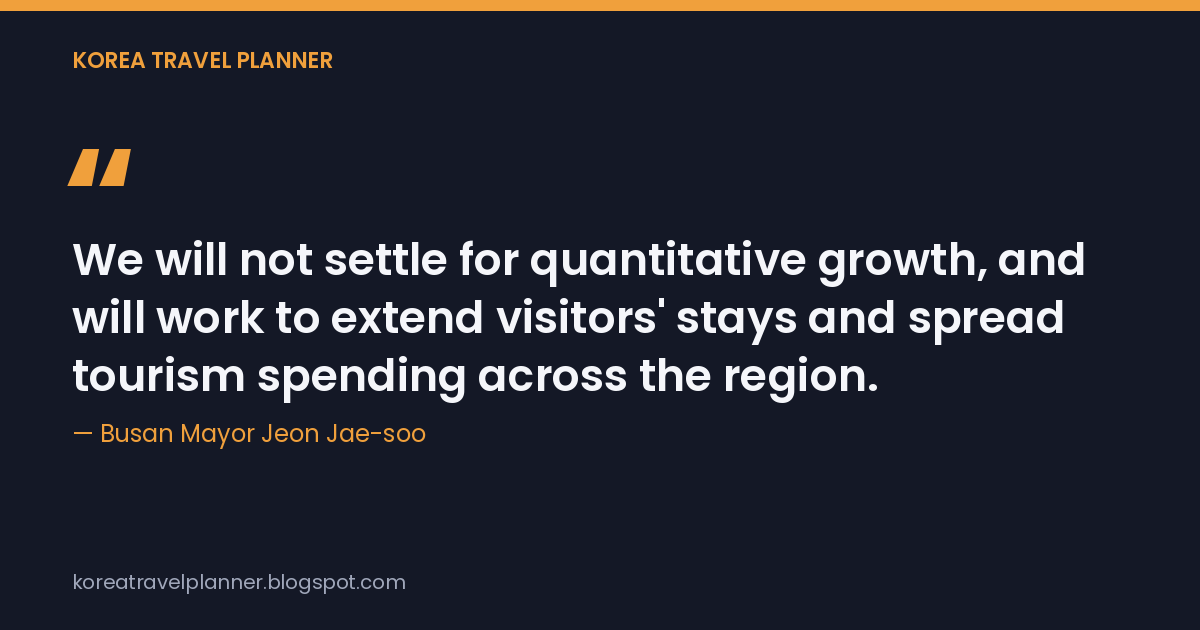
Busan Mayor Jeon Jae-soo isn't calling this mission accomplished. "We will not settle for quantitative growth, and will work to extend visitors' stays and spread tourism spending across the region," he said, per the same Sedaily report, pointing to plans for infrastructure and tourism-content investment. Card spending by foreigners in Busan hit 742.3 billion won through July, real money, but still a fraction of Seoul's 6.7486 trillion won over the same period. "Record growth" and "on par with Seoul" are two different claims, and that gap is worth knowing about before you assume Busan can absorb a Seoul-sized crowd gracefully.
Getting There: KTX From Seoul vs. Flying Straight In
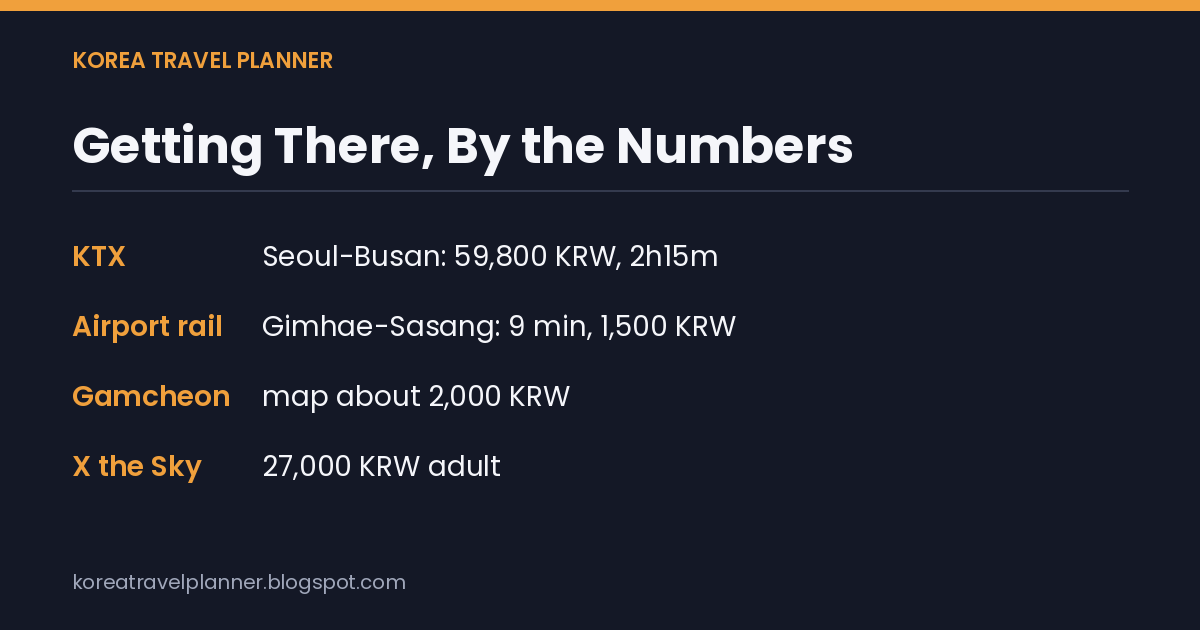
If you're already in Korea, the KTX is still the obvious move. A standard one-way seat had been running 59,800 won, with first class adding another 23,900 won on top, per Korea by Train. Direct trains cover the distance in about 2 hours 15 minutes, while ones stopping at Daejeon or Daegu run closer to 2 hours 30 to 50 minutes. One wrinkle worth knowing: Korail absorbed SRT into a single KTX network on September 1, cutting fares by an average of 10 percent as part of the merger, so the fare you see booking now should land a bit under that 59,800 won figure. Former SRT trains from Suseo Station now run as KTX-Sancheon under the same ticketing system, so don't be thrown if the train name on your ticket looks unfamiliar.
If you're not routing through Seoul at all, that's the more interesting shift. Starlux Airlines launched daily flights between Taipei and Busan's Gimhae airport on June 1, plus three-times-weekly service from Taichung, using A321neo aircraft, joining EVA Air on a route that's now busy enough to explain the flight numbers above. Anyone coming from Taiwan, or connecting through it, can land in Busan directly and skip Incheon entirely.
Once you're on the ground, Gimhae Airport connects to the city by light rail: about 9 minutes to Sasang Station, where you transfer to subway Line 2, for a combined fare in the neighborhood of 1,500 to 2,500 won depending on your final stop. A T-money card, sold at the airport's CU or GS25 convenience stores, works across both systems, so don't bother figuring out separate tickets.
What People Come For
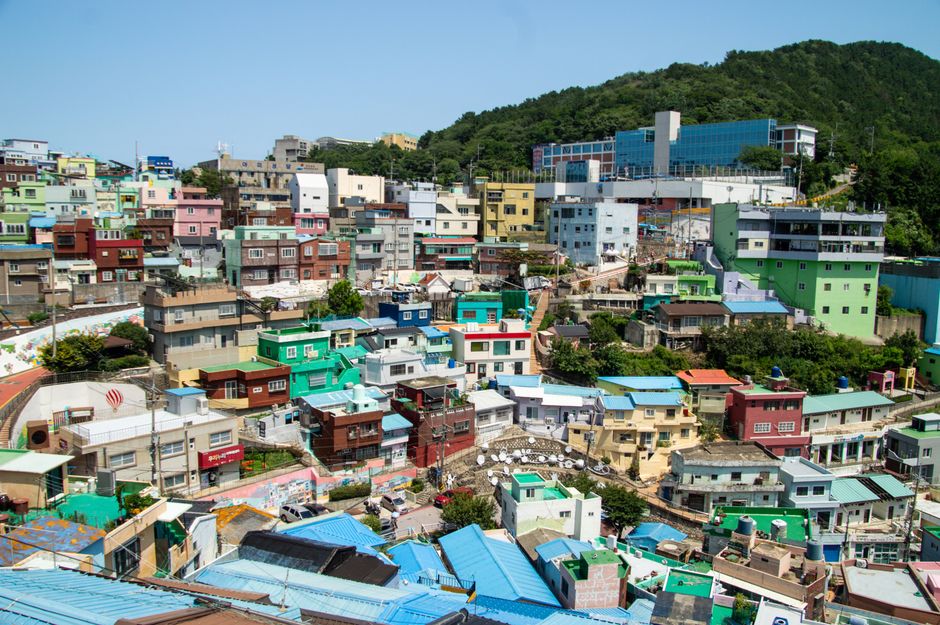
Gamcheon Culture Village is the one you've probably already seen in photos without knowing the name: a hillside of pastel houses stacked above Busan's west side, built out of a postwar refugee settlement and turned into an art district in the 2000s. Entry is free. The optional stamp-trail map at the information center runs about 2,000 won, worth the small spend if you want to find the murals instead of wandering the switchback alleys blind. Take Toseong Station (Line 1), exit 6, then a local Saha 1 or 1-1 bus for the last stretch. The hill is steep enough that walking it in the summer heat is a genuinely bad plan.
Jagalchi Market, down by Nampo-dong, is the other end of the experience: stalls of live seafood, hand-lettered signs, and a smell that tells you exactly where you are before you see anything. It costs nothing to walk through and look, though bring cash if you want to eat what's in the tanks.

For the view, Busan X the Sky sits on the 98th through 100th floors of the Haeundae LCT Landmark Tower, 411.6 meters up, Korea's second-tallest building. Admission runs 27,000 won for adults and 24,000 won for children and seniors, per Stripes Korea. It's not cheap for an observation deck, but it's the one item on this list with no cheaper substitute anywhere else in the city.
This Busan tourism promo video gives a decent visual sense of the coastline-to-hillside range this city covers, if you want to see it before you book anything:
The Booking Risk Nobody Mentions
The surge has a downside the promo videos skip. Busan logged 594 tourism-related complaints in the first seven months of 2026, about 2.5 times all of 2025's 239, according to Seoul Economic Daily, which ties the jump directly to a BTS world tour concert in June that drew 110,000 visitors. An earlier Sedaily report on the May numbers alone found 185 complaints that month, 83.8 percent filed by foreigners, with some lodging rates "surged more than tenfold" and travelers' confirmed bookings unilaterally canceled and the same rooms relisted at the new, higher price. Demand outrunning supply causes this everywhere, not just Busan. But it's exactly the kind of friction Mayor Jeon meant when he said the city wouldn't "settle for quantitative growth."
None of that means skip Busan. It means book through a platform with real cancellation protection, keep a screenshot of your confirmed rate the day you book, and treat any last-minute "your reservation was canceled, please rebook" message as a red flag worth disputing rather than a normal booking hiccup. It's a five-minute precaution against a problem real enough that Korean regulators are now tracking it by the hundreds of cases.
Worth Squeezing Into This Trip?
If you're in Korea for under a week and Seoul is already packed, I wouldn't force Busan in as a rushed day trip. Round-trip KTX alone eats four and a half hours, and Gamcheon plus Jagalchi plus the observation deck deserves closer to a full day and a half on the ground, not a sprint between train departures. But if you've got eight days or more, or you're flying in from Taiwan or elsewhere in Asia where Gimhae now has direct service, this is a genuinely good year to make Busan the anchor rather than the afterthought. The crowds you'll deal with are still lighter than Seoul's, even with growth running twice the national rate.
What's less clear is whether "Busan sickness" holds up once cherry blossom season pushes next spring's numbers even higher, or whether the new Taiwan routes settle into a steadier rhythm once the novelty wears off. As of this week, the momentum is real. Whether the infrastructure the mayor promised actually shows up before the crowds get here first is the part worth watching.
This is a running news series, not a one-off post — new stories go up twice a day, roughly 7am and 7pm Korea time.
More Korea coverage from our network: Hallyu Now · K-Sports Global · Korean Table · Seoul Skin Notes


Comments
Post a Comment