Drone Rules in Korea: Jail Time in No-Fly Zones From Sept 17
Korea's amended Aviation Safety Act took effect on September 17. Until that date, flying a drone without approval inside a designated no-fly zone drew an administrative fine of up to ₩3 million (about $2,200). It now carries up to a year in prison or a criminal fine of up to ₩10 million (about $7,200). Seoul's city government had the change on its own noticeboard a fortnight early, in a notice last updated on September 2.
If you packed a drone for a Seoul trip, what concerns you is where those zones sit. Central Seoul is inside one, and the city says nothing flies within 3.7km of Gwanghwamun.
What the amendment changed
The law is Act No. 21822, promulgated on June 16 and in force from September 17. The Ministry of Government Legislation's own explanation of the revision gives the reason as raising the level of sanction on illegal flights in no-fly zones, to deter conduct that threatens public safety and national security.
The Ministry of Land, Infrastructure and Transport and the Korea Transportation Safety Authority said the penalty would change from the 17th, in an announcement Drone Magazine reported on September 15. Their list of the main no-fly zones is short: P73 covers central Seoul and the area near the presidential office, P518 covers the ceasefire line and military installations, and P61 to P65 cover nuclear plants and the atomic energy research institute.
The old arrangement had an oddity in it, and this reading is mine rather than the ministry's. A ₩3 million 과태료 is an administrative penalty and leaves no criminal record. The prohibited zone, the more sensitive airspace of the two, was therefore drawing the softer category of penalty, while Seoul's guidance for the wider restricted airspace over the city cites Article 161 of the same act and a criminal fine of up to ₩5 million (about $3,600).
Seoul is restricted airspace almost everywhere
The city's airspace notice, last updated on June 12 this year, sets out the geometry. Flying at night, flying while drunk, flying past the point where you can see the aircraft with your own eyes, and dropping anything from it are each banned in their own right. Nothing within 9.3km of an airport, nothing within 3.7km of Gwanghwamun, nothing above 150m anywhere.
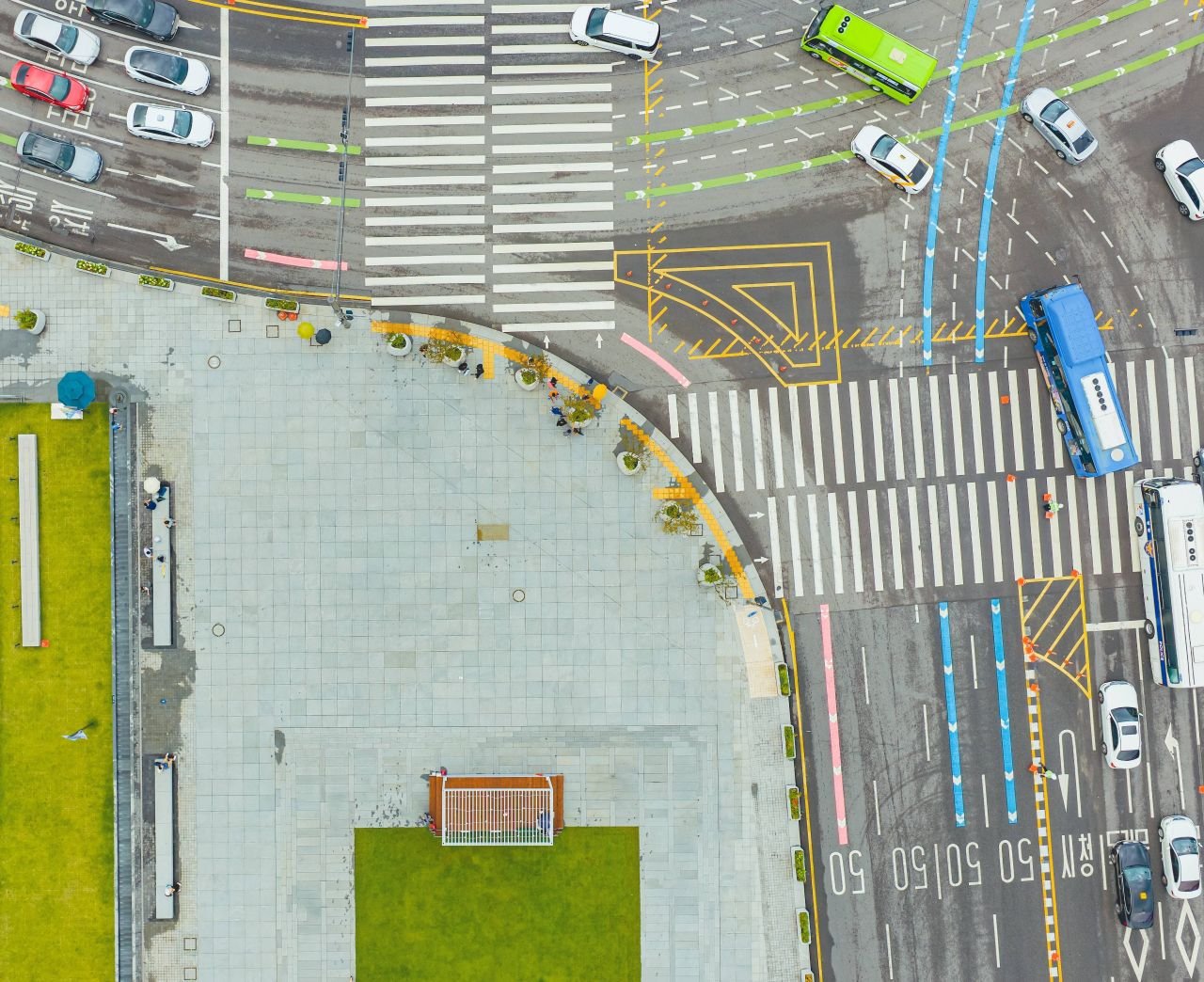
Draw that 3.7km circle from Gwanghwamun on a map before you assume your plan is fine. It closes over Gyeongbokgung, Bukchon, Myeongdong, Namsan and Seoul Station.
It is easy to read Korea's drone rules as organised around a 250g line. The threshold exists. What it governs is pilot certification, and airspace is a separate question. Under the easy-law guide to pilot certification, 250g and under needs no certificate; 250g to 2kg is a Class 4 certificate, which means completing an online course; above that the classes step up to 7kg, 25kg and beyond. Flying without the certificate your weight class requires is a separate administrative fine of up to ₩4 million (about $2,900).
Registration draws a third line. Hobby use only triggers device registration above 2kg maximum takeoff weight, within 30 days of acquiring it, and flying an unregistered drone that should have been registered carries up to six months in prison or ₩5 million.
None of those thresholds buys you central Seoul. The exemption that lets a sub-25kg drone fly without prior approval applies only outside controlled, prohibited and restricted airspace and below 150m, all three at once. A 249g Mini in Jongno is still an unapproved flight in a no-fly zone.
The enforcement record, and the delays behind it
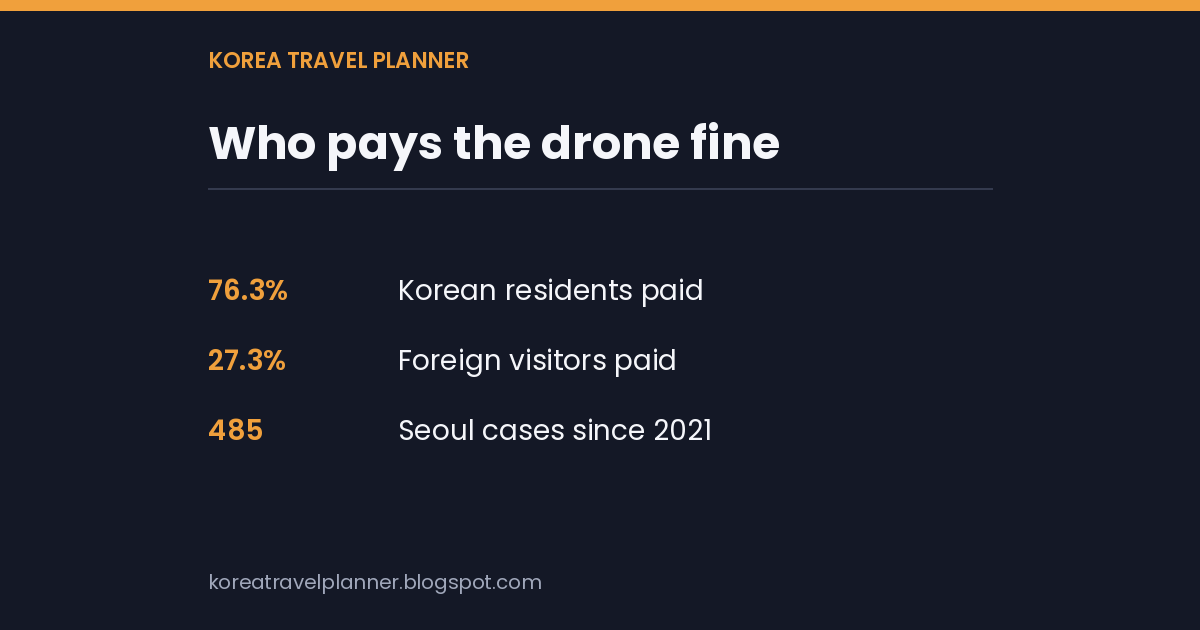
Kukmin Ilbo published figures early on September 18, drawn from data submitted by the Seoul Regional Office of Aviation. Between 2021 and 2026, Seoul logged 485 drone detections and reports, and 362 of them turned into fines worth ₩518 million in total (about $375,000).
The paper led on the split in who paid. Korean nationals paid 225 of 295 fines, or 76.3 per cent. Foreign nationals paid 18 of 66, or 27.3 per cent. Yongsan police station accounted for 106 cases, the most of any station, followed by Jongno with 58, Mapo with 42, Gangnam with 26 and Seocho with 21.
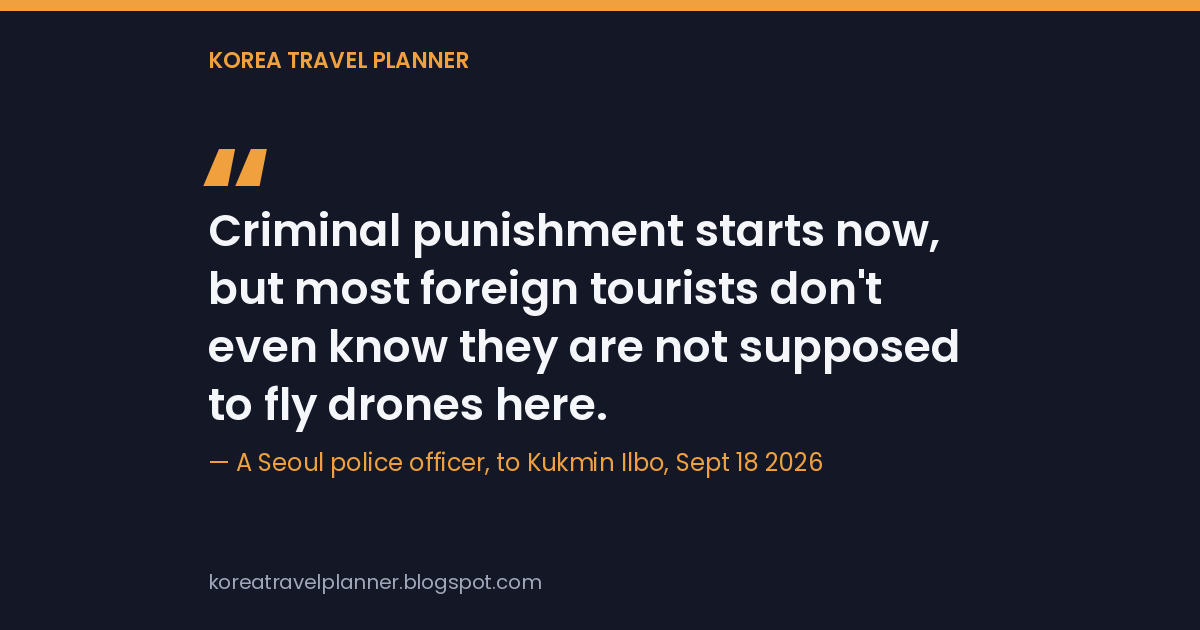
A Seoul police officer told the paper that criminal punishment starts now and that most foreign tourists do not even know they are not supposed to fly drones here.
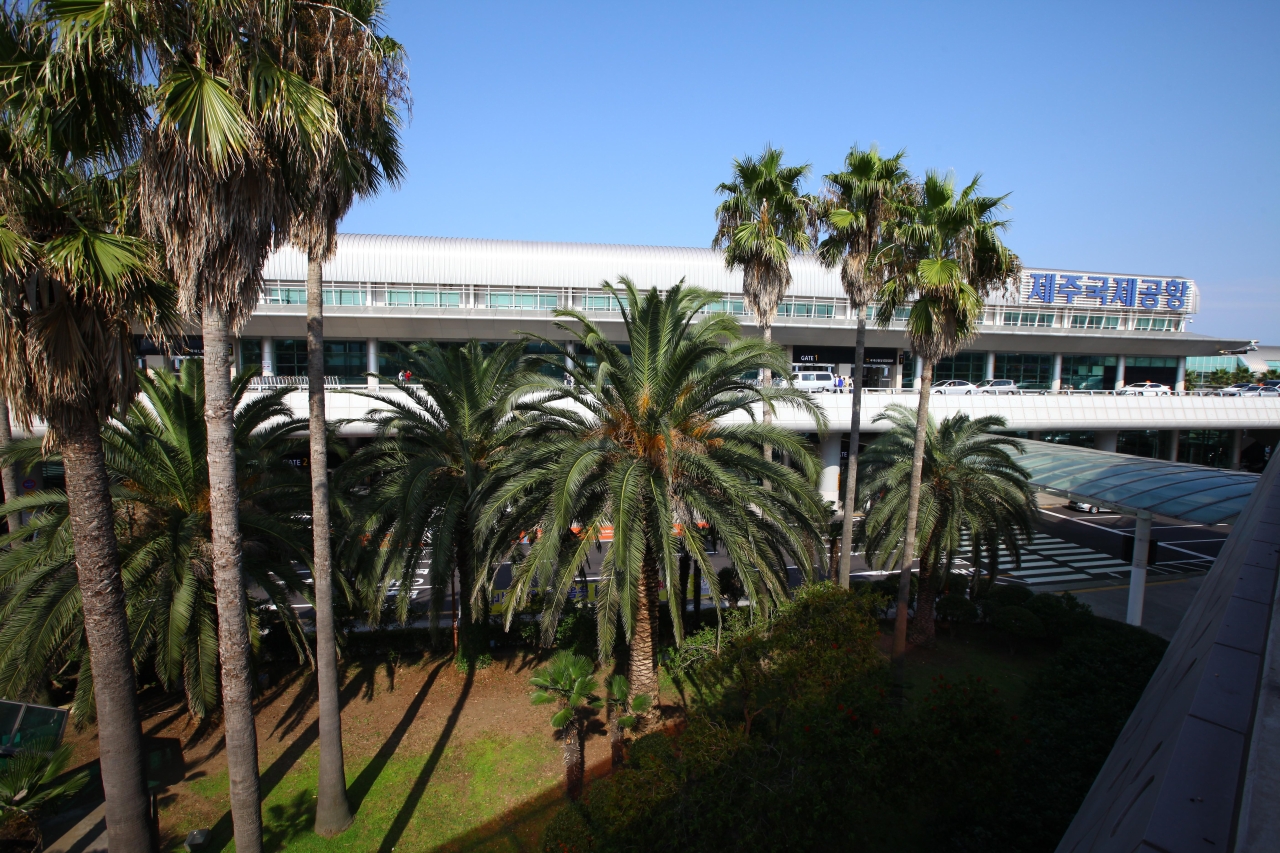
Travellers who never went near a drone get caught in this. On August 31 at 8:34pm an unauthorised drone was picked up near Jeju International Airport and circled the area for about an hour. It came within 400m of the runway, the control authority raised its alert level to "serious", and 38 flights were delayed, 33 domestic and five international, according to Seoul Shinmun.
The same paper reported on September 2 that illegal drone detections at Jeju airport ran to 167 in 2024 and 166 in 2025.
Getting approval, and the wall you will probably hit
Applications go through the Drone One-Stop portal at drone.onestop.go.kr, under 민원신청 then 비행승인. The city asks you to file three to five days ahead. The portal's own front page states three business days for a flight approval, four for aerial photography and seven for device registration.
I opened the sign-up flow to see whether a visitor can get that far. The general membership page offers two account types, 일반회원 and 기업회원, and the identity step describes verification by a mobile phone in your own name or by IPIN. Neither screen showed a foreigner route or an English toggle, and the interface is Korean throughout. Plan around a resident who can file for you, or a local drone operator. I could not confirm from the portal itself whether a short-term visitor with no Korean number and no resident registration can finish the process at all.
Aerial photography is the lighter half of this. Under the Ministry of National Defense's photography guidelines effective January 1 this year, ordinary areas do not need defence approval. The Korea Tourism Organization's English page still tells visitors that photography needs separate permission on top of flight approval. The two pages disagree. You file four working days ahead only when the frame might take in a restricted facility such as a military base or a national security site.
Where you can fly legally
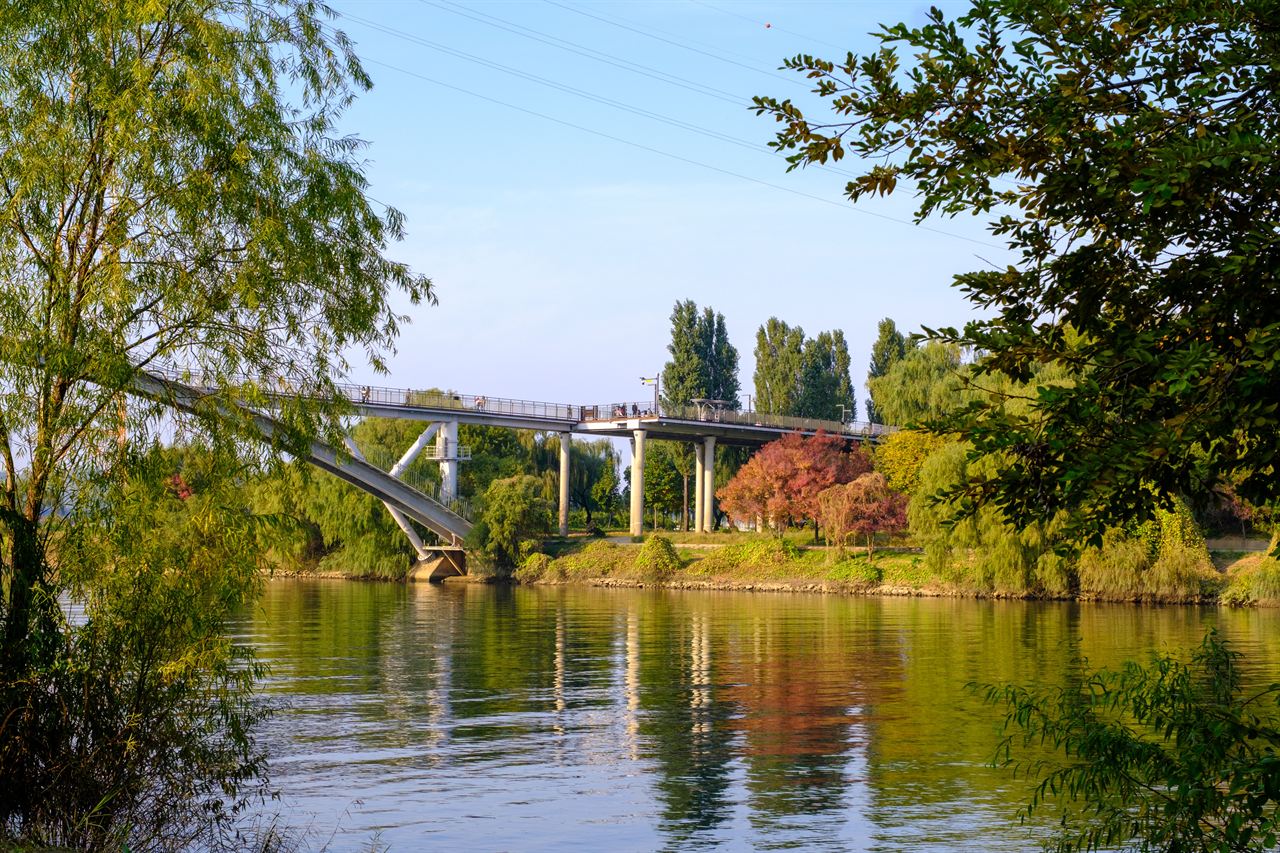
The tourism organization's drone regulations page, dated September 4 this year, names three riverside drone parks: Gwangnaru Hangang in Seoul, Geumgang in Daejeon and Yeongsangang in Gwangju.
Gwangnaru sits in Gangdong-gu, at the eastern end of Seoul's stretch of the Han River. Seoul's own guide to the park puts the address at 83-66 Seonsa-ro, splits the field into racing, rotary-wing and fixed-wing airspace, and asks you to write your name and phone number on the airframe and carry insurance. Individual use is free. Hours run 08:00 to 18:00 from April to September and 08:00 to 16:00 from October to March, with no flying after sunset, per Boan News reporting on the site's safety agreement.
Two cautions on those details. The Seoul city guide I read is from 2021 and the Boan News piece from 2022, but the Han River authority's current page for the site carries the same hours and the same free individual use, so those two still hold. The tourism page describes the three parks as usable without prior notice. Seoul does not. The Han River page sends individuals to advance online booking on the city reservation site, and the Gwangnaru listings there say the old same-day walk-up was dropped on privacy grounds. Both Gwangnaru listings I could open on yeyak.seoul.go.kr today, the 2021 and the 2023 one, were closed services.
What I could not settle from any public page: whether Drone One-Stop will accept a short-term visitor at all. If you have filed a 비행승인 on a tourist visa and it went through, what did you use for the identity check?
Sources: Seoul Metropolitan Government on flight approval for the city, the Aviation Safety Act revision record, Kukmin Ilbo, Seoul Shinmun, and the easy-law guide to device registration. Won figures converted at roughly ₩1,380 to the dollar, the level quoted on September 16, and all of them move.
This is a running news series, not a one-off post — new stories go up twice a day, roughly 7am and 7pm Korea time.
You might also like: Article 60 and the K-Pop Enlistment Delay That Ends at 30 (Hallyu Now)
More Korea coverage from our network: Hallyu Now · K-Sports Global · Korean Table · Seoul Skin Notes


Comments
Post a Comment