Myeongdong Still Wins Seoul's Shopping Money, New Data Shows
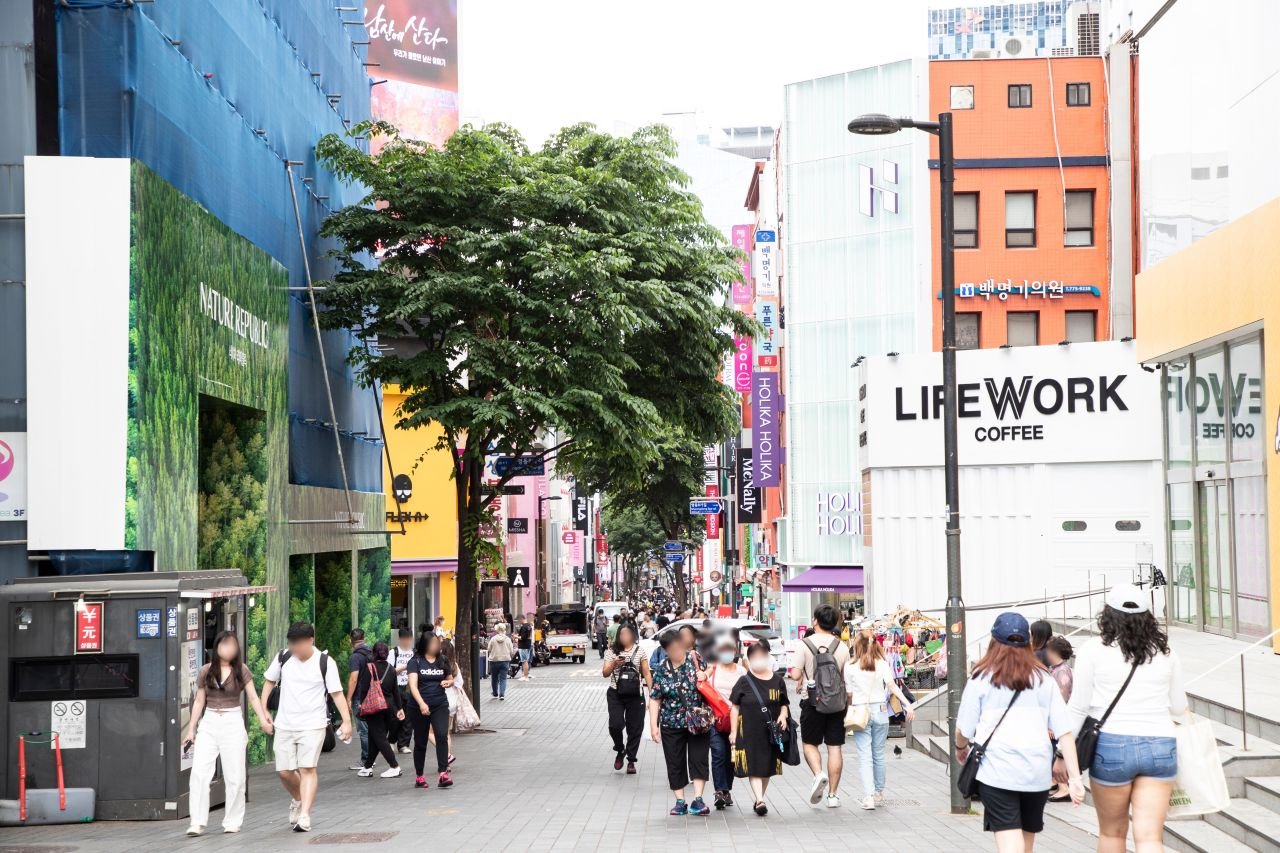
Foreign shoppers put ₩568.4 billion (about $424 million) through their cards in Seoul's Jung-gu, the district Myeongdong sits in, during the second quarter of 2026, according to Korea Tourism Organization data reported this week. That's 24.1% of every won foreign tourists spent shopping nationwide, up from 20% a year earlier. Jung-gu's own foreign-card shopping total roughly doubled year over year, growing faster than the national number did.
Twenty-four percent of the country's tourist shopping money, funneled through one subway stop?! Your Instagram feed might say otherwise (all Seongsu cafes and Yeouido skyline shots lately), but the receipts tell a different story.
Seongsu got the visits. Myeongdong got the money.
The Visits Went One Way, the Money Went Another
Foreign visitor counts to Seongdong-gu, home to Seongsu, jumped 60.2% year over year in the same quarter. Yeongdeungpo-gu, where Yeouido sits, was up 27.6%. Jung-gu grew a comparatively modest 25.5%, the slowest of the three.
None of that shows up in the spending. Jung-gu's large shopping facilities alone (department stores, outlets, big-box retailers) pulled in ₩385.5 billion, 38% of the national ₩1.02 trillion spent at that category of store. An industry official put it plainly to The Korea Herald: "With department stores that house luxury boutiques, the Myeong-dong area is maintaining its status as a shopping hub where visits translate into actual purchases."
Why This Matters for Your Itinerary
Seongsu earns the visit: the concept stores, the roastery-of-the-month, the building someone's phone camera made famous. It doesn't have the purchase infrastructure to match: the small-batch shops there aren't set up for tax-free processing the way a Myeongdong storefront with a "Tax Free" sticker on the door is, and there's no Lotte or Shinsegae flagship a five-minute walk from the coffee.
Here's the flat version: it's not that Myeongdong is more charming. It's that the tax-free signage, the exchange counters, and the actual stock happen to be concentrated there, and Seongsu just hasn't built that infrastructure yet.
If your Seoul time is tight, split it deliberately instead of trying to do both properly. Traveling with kids or only got a layover-length window? Skip the Seongsu crawl and put your two hours into Myeongdong: souvenirs, a meal, and a tax refund done before dinner. Have a full extra day and already got the practical shopping out of the way? Seongsu is worth the subway ride for the cafes alone, just don't go there expecting to check souvenirs off the list.
This Sits Inside a Bigger Spending Boom
Zoom out and the Myeongdong number is one slice of a much bigger year. Foreign arrivals hit 10.71 million in the first half of 2026, up more than 21% from the same period the year before, and total foreign credit card spending topped ₩12.08 trillion, up 48.2%, according to Korea JoongAng Daily's coverage of the same tourism data. Shinsegae's foreign customer sales alone jumped 120% year over year in the period. A weaker won is doing a lot of that work. Hankyung put the exchange rate near ₩1,500 to the dollar this year, which is the kind of shift that makes a Seoul shopping trip noticeably cheaper than it was two years ago, even before any refund.
That backdrop is why the Myeongdong-versus-Seongsu split matters beyond one neighborhood's bragging rights. More people are arriving with more money to spend than at almost any point on record, and the data says most of it is still landing on a handful of blocks around one subway station — not spreading out evenly across every trendy district getting geotagged this year.
Getting There, and Using the Tax Refund
Myeongdong Station is Line 4; exits 5 through 8 put you straight onto the shopping streets without a detour through traffic. From there it's a flat, walkable grid — no separate ticket, no shuttle.
The refund part trips up more first-timers than the shopping does. According to the official Visit Korea guide, any single-store purchase of ₩15,000 or more (about $11) qualifies for the immediate tax refund system at participating stores, capped at ₩1,000,000 per receipt and ₩5,000,000 total per trip. Look for the "Tax Free" sticker at the register: the discount comes off the price on the spot, no separate counter, no form.
A common mistake first-timers make is saving every receipt for the airport kiosk instead, on the assumption that's just how it works. Then the queue eats the layover buffer they built in, and the flight boards before the refund does.
Walk far enough down the main strip after dark and you'll smell it before you see it — hot oil and vinegar, off a spiral-cut potato skewered and fried on the spot. It's one of the street's actual fixtures, not a photo prop invented for tourists.

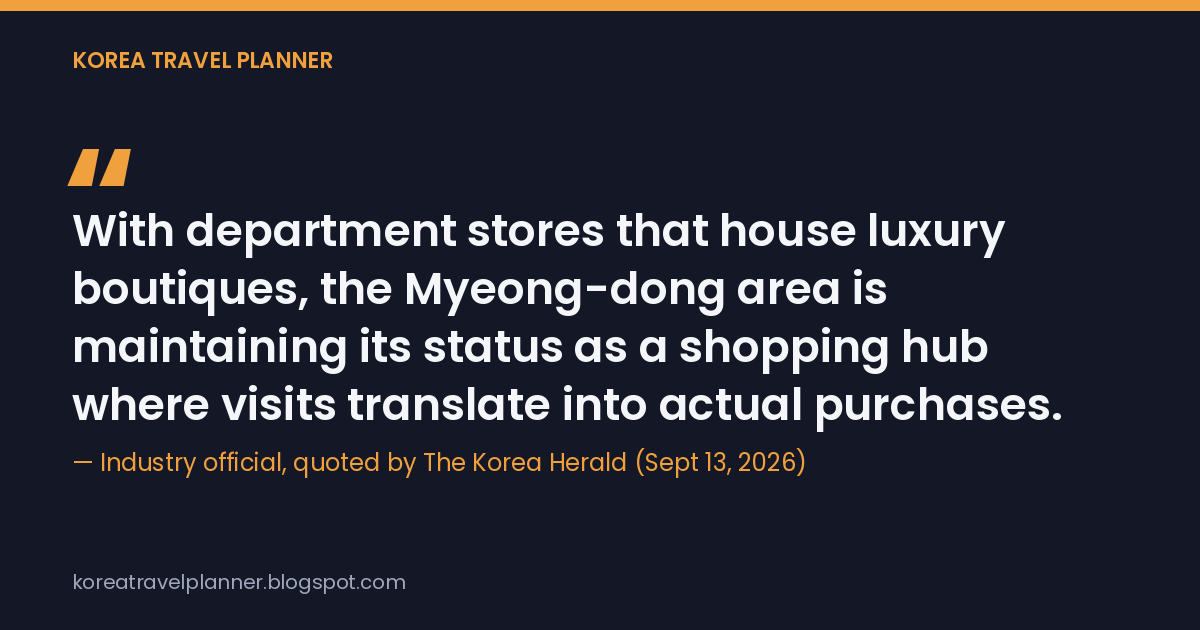
Not every stall takes a card, so keep some cash on hand even with a tax-free purchase sitting in the same bag. Small stuff, but it's the kind of thing that derails an afternoon.
The data says Myeongdong isn't fading, whatever Seongsu's foot traffic numbers look like this quarter. Put your shopping block there, treat the trendier neighborhoods as the extra, and you'll spend less time hunting for a refund counter and more time using your trip. If you've found a Seongsu shop where you actually spent money instead of just taking a photo, I'd like to hear about it.
Sources: The Korea Herald (Sept 13, 2026); Visit Korea official tax refund guide; Korea JoongAng Daily; Hankyung.
This is a running news series, not a one-off post — new stories go up twice a day, roughly 7am and 7pm Korea time.
More Korea coverage from our network: Hallyu Now · K-Sports Global · Korean Table · Seoul Skin Notes


Comments
Post a Comment