Seoul Taxi Fare 2026: ₩4,800 Base, ₩6,700 at Midnight
"We've put up with it for three years" was the first half of Hankyung's April 1 headline over a story asking whether the Seoul taxi fare would reach ₩5,500 (the Korean reads "'3년 참았다' 택시업계 술렁…기본요금 5500원까지 오르나"). On October 9 (KST) the fare the city publishes is still ₩4,800 for the first 1.6 km, from a table that has applied since 04:00 on February 1, 2023, and I opened the city's page for it that day.

₩4,800 or ₩5,500: which number is on the meter?
Seoul's price information page lists the mid-size taxi at ₩4,800 for the first 1.6 km, then ₩100 per 131 m and ₩100 per 30 seconds, and closes the table with "2023.02.01 04시부터 적용". The city's separate taxi fare page, last edited April 3, 2026, carries the same figures.
The ₩5,500 comes from the newspaper. Hankyung reported that a rise of 10 to 15% was being mentioned in and around the industry, and quoted an official of the Seoul taxi operators' association saying the industry keeps asking for fares to be brought in line with accumulated fuel and labour costs. Its case is parity. It puts the subway base fare at ₩1,550 after two rises, in 2023 and last year, and says city-bus fares went from ₩1,200 to ₩1,500 in August 2023, while the taxi table has not moved. Seoul told the paper it had no plan to raise public-transit fares for now, and the article quotes no city statement about a taxi rise.

The last rise went through a public hearing and a city-council hearing in September 2022, then a price-committee review that finished on October 25, 2022. The night window changed on December 1, and the base fare on February 1, 2023, a little over three months after the committee vote. That round also cut the base distance from 2 km to 1.6 km, on top of the rise from ₩3,800 to ₩4,800. Three Korean searches I ran on October 9 (fare hike, price committee, public hearing) returned no 2026 hearing date or committee decision.
22:00 to 04:00: what does a night ride cost?
The same table has two night rows. From 22:00 to 23:00 and from 02:00 to 04:00 the base is ₩5,800 and the distance and time steps are ₩120. From 23:00 to 02:00 the base is ₩6,700 and the steps are ₩140. Because the steps rise along with the base, the 20% and 40% apply to the whole fare, base and steps alike.
A ten-kilometre ride, with no traffic delay and no tolls, comes out like this (my arithmetic from Seoul's table):
| Time of day | Base, first 1.6 km | Per 131 m | 10 km ride |
|---|---|---|---|
| Daytime | ₩4,800 | ₩100 | ₩11,200 |
| 22:00–23:00, 02:00–04:00 | ₩5,800 | ₩120 | ₩13,480 |
| 23:00–02:00 | ₩6,700 | ₩140 | ₩15,660 |
That is 64 steps after the base (8,400 m divided by 131 m, rounded down). At ₩1,342 to the dollar (open.er-api.com, October 9) the midnight ride is about $12 or £9, and the daytime one about $8 or £6. Per Seoul's page, time and distance are counted together below 15.72 km/h, so a ride stuck in traffic costs more than the table shows.
Calling a cab adds a fee on top. Seoul's call-fee standard, ₩1,000 by day and ₩2,000 at night, covers phone-only calls, and app calls are filed separately with the transport ministry. Premium services that Seoul lists with their own reported fares, Kakao Black among them (₩6,000 with no base distance), add elastic pricing of 0.7 to 4.0 times. The total to go by is the one your app shows before you confirm.
₩85,000 or the meter: what do you pay from Incheon Airport?
Both exist. Incheon Airport's taxi page lists regular taxis at the same ₩4,800 base with the same 20%, 40%, 20% night steps, so a ride from the stands runs on the meter. The out-of-city 20% (시계외할증) does not apply on the way to Seoul, Incheon, Bucheon, Gwangmyeong, Gimpo or Goyang, because the airport is a shared taxi zone for those cities. Beyond them it adds 20% for Seoul and Gyeonggi cabs and 30% for Incheon cabs.
The page splits its table by where the cab is licensed, and Gyeonggi cabs have a different night rule: a flat 30% from 23:00 to 04:00.
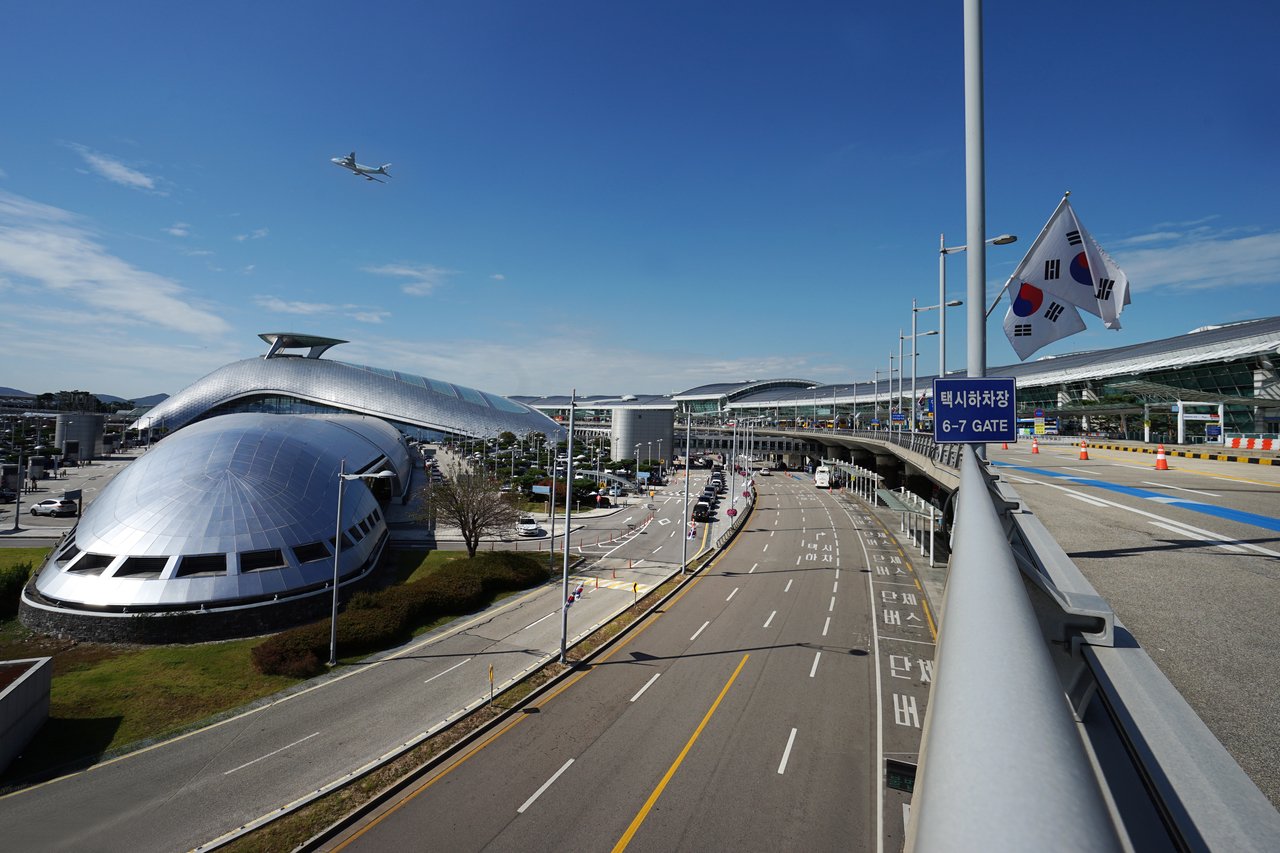
The flat fares you may see quoted belong to the International Taxi, which the airport page marks "외국인 전용" (foreigners only): 1644-2255, stop 4C at Terminal 1 and 3C at Terminal 2. Seoul's price page sets them by district, ₩70,000 to ₩95,000 for a mid-size car and ₩100,000 to ₩140,000 for a deluxe one. Jung, Jongno and Yongsan are ₩85,000, and Gangnam and Seocho are ₩90,000. The same service can be hired by the day, from ₩70,000 for 3 hours to ₩240,000 for a full day in a mid-size car. Per the same page, a 20% foreigner surcharge can be added when an International Taxi runs on the meter.
The airport also says call vans posing as taxis have often charged unfair fares ("부당요금 징수사례가 빈번히 발생") and asks arrivals to walk to the designated taxi stops.
₩7,000 for 3 km: is a deluxe taxi worth the gap?
Deluxe (모범) taxis start at ₩7,000 for 3 km and ₩8,400 at night, and the same arithmetic puts a ten-kilometre daytime ride at ₩16,200 against ₩11,200 in a regular cab. On a ride that length, a ₩5,000 premium is a fair reason to skip it.
Sources: Seoul price information (taxi), Seoul taxi fare page, Seoul price-committee notice (page last edited October 26, 2022), Incheon Airport taxi guide, Hankyung, April 1, 2026; exchange rate from open.er-api.com, October 9.
This is a running series, not a one-off post — a new post goes up every day, at around 5pm Korea time.
About · Contact · Privacy Policy
Read next: Incheon Airport to Seoul After Midnight: Night Bus or Taxi? · Incheon Airport's Chuseok Crush Splits Across Two Days · Incheon Airport's New Sunflower Lanyard Needs No Proof


Comments
Post a Comment