Korea Autumn Foliage 2026 Forecast: Seoraksan Oct 3, Seoul in Nov
The Korea autumn foliage 2026 forecast is out, and it says one thing clearly: go later than you were planning. Private forecaster WeatherEye (웨더아이) posted its 2026 foliage timing on September 4, and every date in it comes later than the long-term average. Seoraksan, always the first mountain in the country to turn, gets its first color on October 3. Seoul and the rest of the central region don't peak until October 31 to November 5. The far south (Jirisan, Naejangsan) runs November 5 to 13.
That is the whole forecast in three sentences. What follows is what those dates mean for a flight you haven't booked yet, with the transit fares and prices I could confirm as of September 7, 2026 (won converted at 1,346 KRW to the dollar, Monday's rate).
The 2026 dates, mountain by mountain
WeatherEye's two milestones are the same ones Korean forecasters have always used. "First foliage" (첫 단풍) means roughly 20% of the mountain has turned, counted from the summit down. "Peak" (절정) means about 80%. Peak is what you want, and it lands about two weeks after first color.
| Region | First color (20%) | Peak (80%) |
|---|---|---|
| Seoraksan (east coast, Gangwon) | Oct 3 | Oct 16–25 |
| Odaesan (Gangwon interior) | not listed | Oct 16–25 |
| Central Korea (Seoul, Gyeonggi, Chungcheong) | Oct 10–27 | Oct 31–Nov 5 |
| Jirisan and the south (incl. Naejangsan) | Oct 22–Nov 5 | Nov 5–13 |
Source for every row: WeatherEye, Sept 4, 2026, also carried by Gukje News the next day. The forecast says the color front moves south at 20 to 25 km a day, which is a useful number if you're trying to time a second mountain a week after the first.
Two things this table does not say. It doesn't name Seoul specifically (Seoul falls inside "central"), and it doesn't cover the Korea Forest Service's separate species-by-species map, which normally arrives later in September. In 2024 that map came out on September 23 and put the national maple peak on October 29.
Why "late" changes the trip more than the dates do
WeatherEye's reasoning is one line: September and October daily averages are both expected to run above normal, so the color starts late. Warm autumns also tend to produce a longer, duller turn rather than a short, vivid one, though the forecast itself doesn't promise either, and neither will I.
The practical problem is the calendar. October 3 is a Saturday in 2026, and because it's National Foundation Day, Monday October 5 becomes a substitute holiday. Hangul Day follows on Friday the 9th. Korean office workers who take three days of leave get a nine-day break from October 3 to 11, and a lot of them are going to point their cars at Seoraksan on the exact weekend the forecast says the first leaves turn.
You don't want to be on that road. At 20% color, you'd be queuing for a mountain that is still mostly green.

If you can only pick one window, pick the week of October 17 to 24 for Seoraksan, on a weekday. That is inside the forecast peak and after the holiday crowd has gone home. If your dates are fixed in early November, forget Seoraksan entirely and build the trip around Seoul's palaces plus one southern mountain. Either way, Chuseok (September 24 to 26 this year) is over before any of this starts, so the train-ticket scramble I wrote about last week doesn't apply here.
Seoraksan as a day trip from Seoul, with the real fares
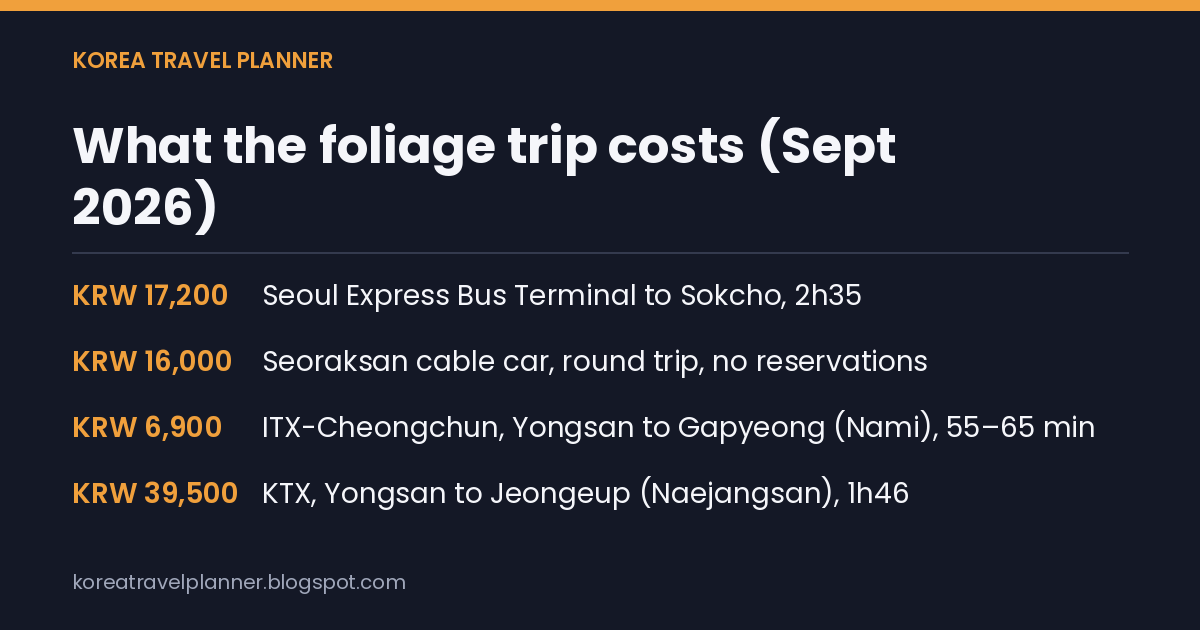
Seoraksan sits behind Sokcho on the east coast. From Seoul Express Bus Terminal (Line 3, 7, or 9), the express bus to Sokcho is scheduled at 2 hours 35 minutes, with 46 departures a day from 06:00 to 23:30. Weekday adult fares start at ₩17,200 (about $13) for a standard bus and ₩22,300 ($17) for the wider-seat udeung class, per the operator timetable updated August 31. The page labels those as weekday, one-adult figures. From Sokcho's terminals, city buses 7 and 7-1 run to the park entrance at Seorak-dong every 15 to 20 minutes, about 50 minutes for the ride, per Sokcho's transit timetable. That last leg is the slow one.
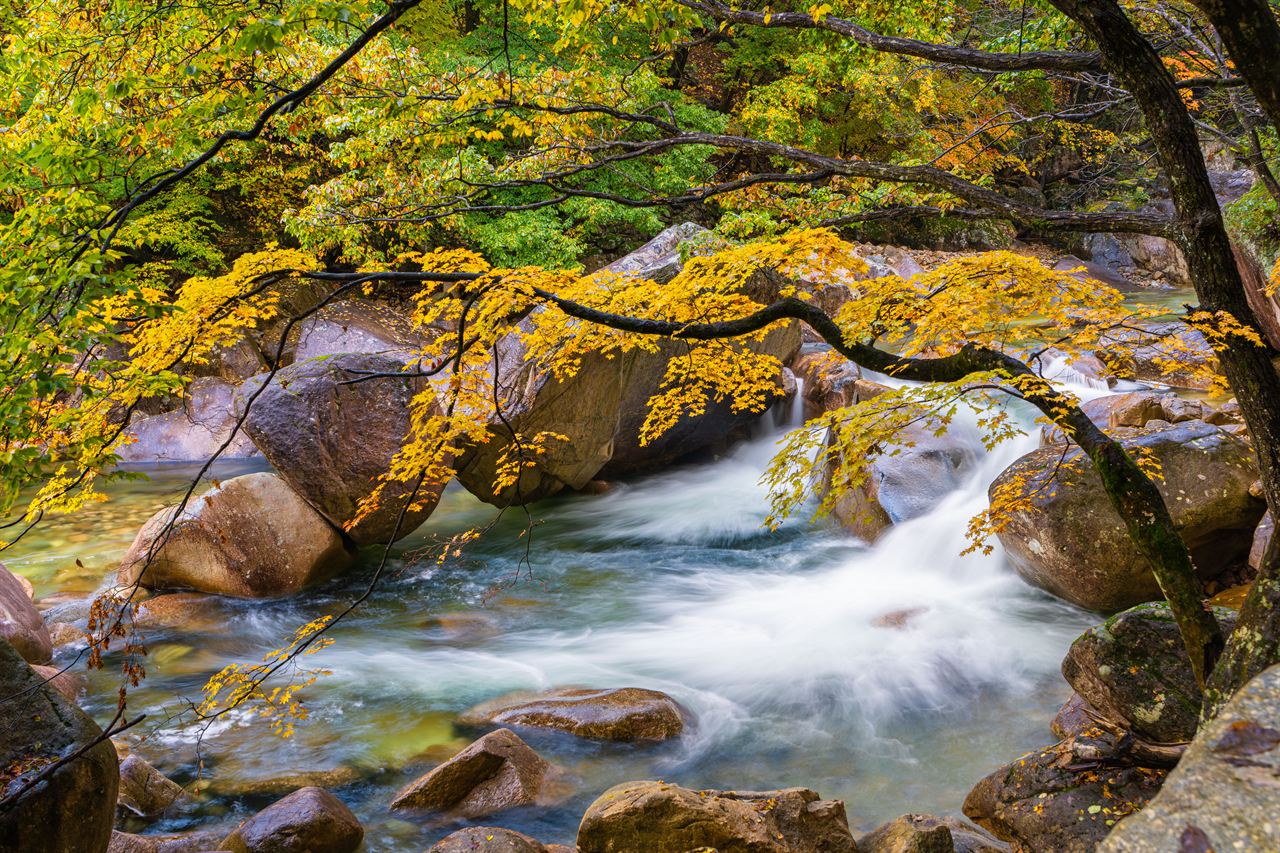
Getting into the park costs nothing. National park admission ended on January 1, 2007, and the separate "cultural heritage fee" that the Sinheungsa temple used to collect at the Seoraksan gate was abolished on May 4, 2023. Older blog posts still quote an entry charge at the gate. Ignore them.
The one thing you will pay for is the cable car up to Gwongeumseong. The operator's guide page lists ₩16,000 round trip for anyone middle-school age and up (about $12), ₩12,000 for younger kids, five minutes each way. It does not take reservations at all: same-day, in-person purchase only, and the page's own peak-season block runs September 19 to November 15. In practice that means arriving at the ticket window before the first bus crowd does, or accepting a wait.
Skip the Ulsanbawi hike if you're on the fence about it. It's 7.6 km round trip with a steep stair section at the end, and Korean hiking guides budget four to five hours for it. In peak week, the cable car plus the short walk from the upper station gives you a comparable view over the same orange valley for ₩16,000 and fifteen minutes. Do the hike if you're a hiker. Don't do it because a listicle told you to.
Seoul and Nami Island: first week of November
Central Korea peaks October 31 to November 5 in this forecast, and that covers the two places every first-timer photographs: the ginkgo line along Deoksugung's stone wall path and the maples inside Changdeokgung's rear garden. Both are walkable from City Hall and Anguk stations, so you don't need a day trip for them.
If you do want one, Nami Island is the cheapest big-foliage day out of Seoul. The ITX-Cheongchun train from Yongsan to Gapyeong is ₩6,900 ($5) and takes 55 minutes to just over an hour depending on the service, per the current timetable. I couldn't open the island's own fee page today, so I'm not quoting the entry price; check it before you go, since it changes most years.
Naejangsan, if your trip is already booked for November
Naejangsan, in Jeongeup in the southwest, is the mountain Koreans mean when they say "Naejangsan in autumn" the way Americans say "Vermont." Its maples are the reddest in the country, and in this forecast it peaks November 5 to 13, which makes it the right target for anyone who lands after Seoraksan is finished.
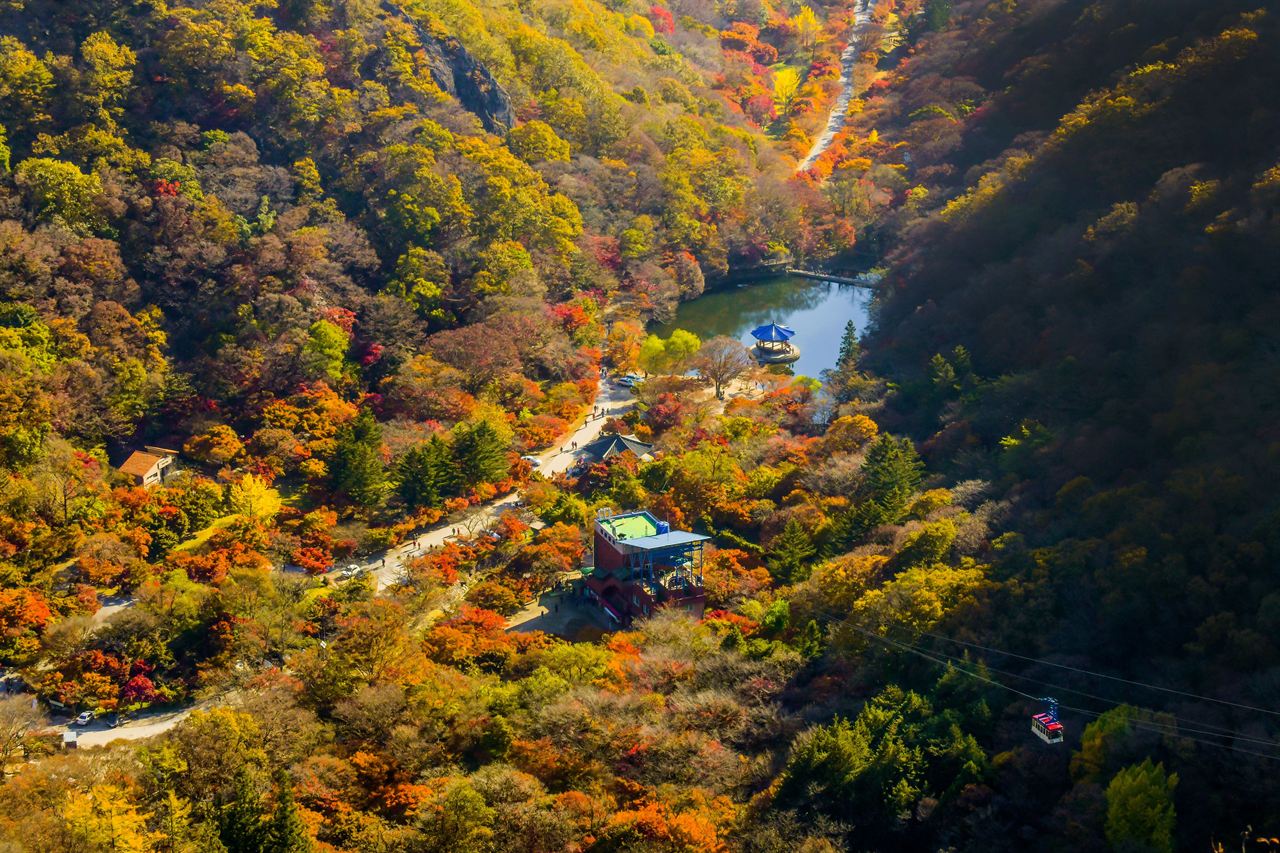
From Seoul's Yongsan Station, the KTX to Jeongeup is listed at ₩39,500 one way (about $29) and about 1 hour 46 minutes on today's schedule listing. From Jeongeup Station, the Korea Tourism Organization's own Korean-language Naejangsan guide says city bus 171 takes about 45 minutes to the park and a taxi about 20, and recommends the taxi because the bus runs infrequently. I'd take that advice on a peak weekend and split the taxi with whoever is standing next to you at the rank.
A common first-timer mistake is doing Naejangsan as a Seoul day trip on a Saturday in peak week. The maple tunnel on the walk in to Naejangsa temple is what the photos show, and on those days it's shoulder to shoulder. Go on a Tuesday, or stay the night in Jeongeup and walk in at 8 a.m., when the only sound on the path is dry leaves underfoot.
The Korea Meteorological Administration's live foliage observation page currently says it's outside the service period. When it switches on for the season, it reports observed first-color dates per mountain, which beats any forecast. The Forest Service map should follow in the same window. I'll fold both into this post when they land.
Book the bus, not the mountain. Nothing in Seoraksan needs a reservation, and the cable car won't take one anyway.
This is a running news series, not a one-off post — new stories go up twice a day, roughly 7am and 7pm Korea time.
More Korea coverage from our network: Hallyu Now · K-Sports Global · Korean Table · Seoul Skin Notes


Comments
Post a Comment