How Much Cash to Bring to Korea for a Week (₩100,000)
For a week in Korea, ₩100,000 in cash (about $74 or £56 at the ₩1,347-per-dollar rate on October 3, 2026) is a sensible ceiling for most visitors, and ₩50,000 is enough if you stay in Seoul and eat in restaurants. Cards cover nearly everything else. The cash is for the handful of places where a card reader simply isn't there.
Korean payment data backs that up. In the Bank of Korea's 2024 survey of about 3,500 adults, cash accounted for 15.9% of payments by number of transactions, against 46.2% for credit cards. The Korean wording is "현금 이용 비중(건수 기준)은 15.9%", and the same coverage shows the share was 26.4% in 2019. The survey also found residents carry an average of ₩66,000 in their wallets, so a visitor with ₩100,000 is already holding more than the typical local.
Among people in their 20s and 30s, mobile cards were preferred by 36.8% and 34.9%, nearly level with credit cards. This is a survey of residents, so it says what locals do and not what a foreign card can do at a given counter.
Where the cash actually goes
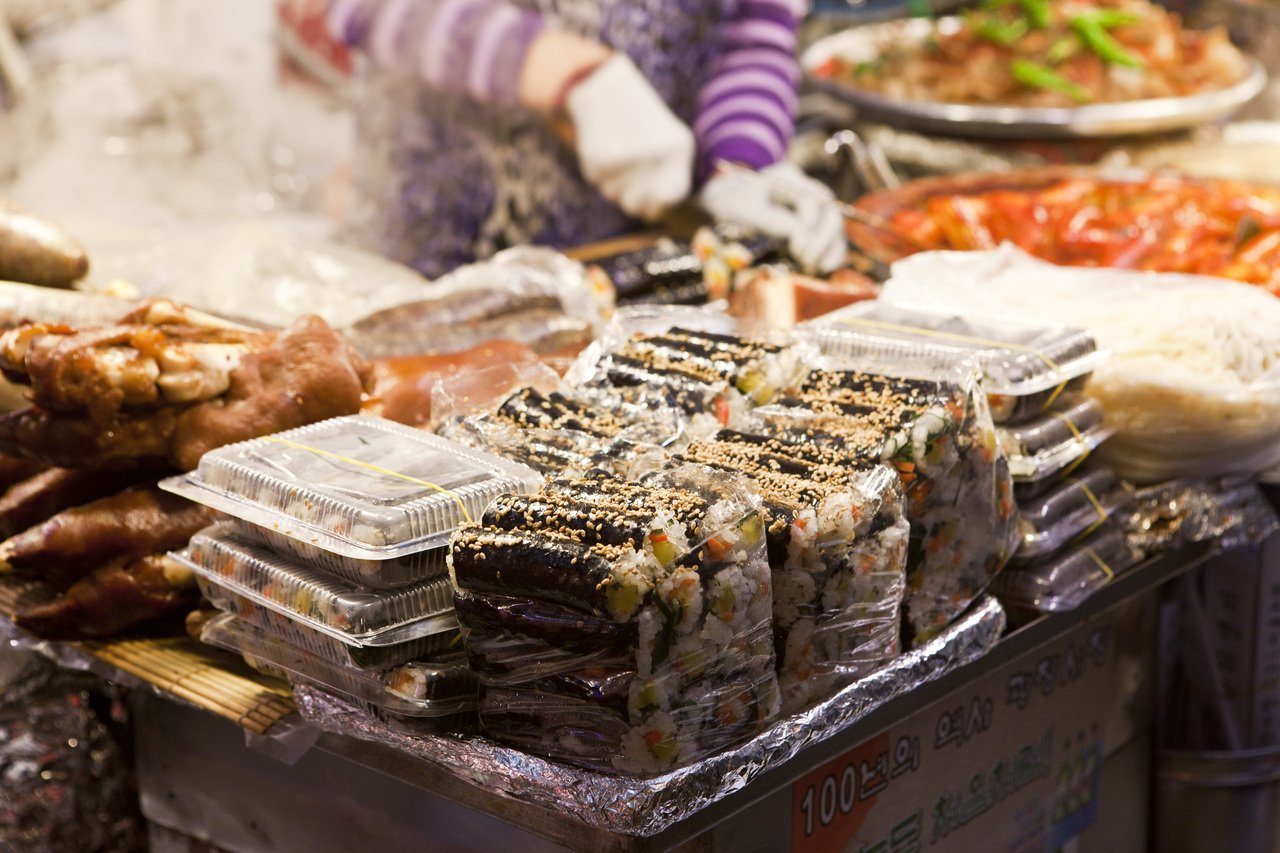
One Korea cash guide lists traditional markets, street food stalls, small local restaurants, rural areas, local festivals and transport-card top-ups as the places you will want won (it was last updated June 30, 2026). The same Bank of Korea survey points the same way. Among respondents aged 60 and over, 30.2% named cash as their preferred payment method, against 2 to 5% in other age groups.
So a week splits into two kinds of days. On a Seoul day built around hotels, department stores, cafes and sit-down restaurants, you may spend no cash at all. On a day at Gwangjang or Namdaemun, one skewer or one bag of gimbap at a time, cash is simply faster than asking whether a stall takes a card.
Fees, limits and the one ATM setting to check
Withdraw once on arrival rather than three times in small amounts. A 2026 foreign-card ATM guide puts the fee at around ₩3,000 to ₩4,000 per withdrawal (about $2.20 to $3.00) at convenience stores and around ₩3,000 at bank ATMs. The fee is charged per transaction, so it does not shrink when the amount does. Your own bank may add a foreign-transaction charge on top, and I did not check any home-country bank's schedule.
Per-transaction limits are around ₩1,000,000 at bank ATMs but only around ₩300,000 at convenience-store machines. ₩100,000 fits under both. Look for a "Global ATM" or "Global Service" sign, because many Korean machines are domestic-only. When the screen offers to charge you in your home currency, choose won. The guide says the operator's conversion rate is typically much worse than the Visa or Mastercard rate.
A ₩4,000 fee on a ₩100,000 withdrawal is 4% of the money. On ₩300,000 it is 1.3%.
The T-money exception
A basic T-money card costs about ₩2,500 to ₩4,000, according to a guide to charging and refunding it. The guide says that is the price of the card itself and no deposit is involved. The same page says charging a regular rechargeable card with a foreign card at station kiosks is not covered by the 2026 foreign-card announcement. It describes only a Mobile T-money app route, for Mastercard, Amex and UnionPay but not Visa, with a fee of about 4.5%. For a plastic card, that leaves won.
On the way out, the guide lists convenience-store refunds for balances up to ₩20,000 (GS25, 7-Eleven) or ₩30,000 (CU, emart24), with a ₩500 fee.
Seoul buses are due to change in 2027. I covered the plan in Seoul Buses to Accept Foreign Credit Cards From 2027, which does not help a trip this week.

A cash plan by traveler type
If you are staying in Seoul, sleeping in a hotel and eating in restaurants, bring ₩50,000. The Korea cash guide above gives the same figure for short Seoul visits, and you can withdraw more if the T-money card runs low.
If the week includes a market-heavy itinerary, a festival or a day trip outside a major city, bring ₩100,000 and ask for a mix of ₩10,000 and ₩1,000 notes where you can, since small stalls rarely want to break a large bill. That last point is my judgment, not something I found in a source.
Travelling as a group with one shared cash pot, take the larger single withdrawal. The fee is charged per transaction, so ₩300,000 at a bank ATM costs the same as ₩30,000.
Anything beyond that is for the rarer case where a taxi or small vendor wants won. The guide above lists "some taxis" among them. Whether yours will is hard to know before you get in.
Sources: Bank of Korea survey as reported by MBC and Hankook Ilbo; Korea Travel Lab; lacha.co.kr; exchange rate from open.er-api.com, checked October 3, 2026. Fees and limits vary by bank and change, so check your own card's schedule before you fly.
This is a running series, not a one-off post — a new post goes up every day, at around 5pm Korea time.
About · Contact · Privacy Policy
Read next: Seoul Buses to Accept Foreign Credit Cards From 2027 · T-money vs K-Pass: Which Seoul Transit Card Should Tourists Buy · Andong Mask Dance Festival Final Weekend, Oct 3-4


Comments
Post a Comment