Seoul Buses to Accept Foreign Credit Cards From 2027
Hana Card told reporters on September 22 that Seoul's city buses will let riders tap a foreign-issued Visa, Mastercard, UnionPay, or JCB card straight onto the fare reader starting January 2027. No T-money purchase, no top-up screen. The company signed the agreement with Tmoney and the four card networks the same day, according to Newspim and Aju Business Daily.
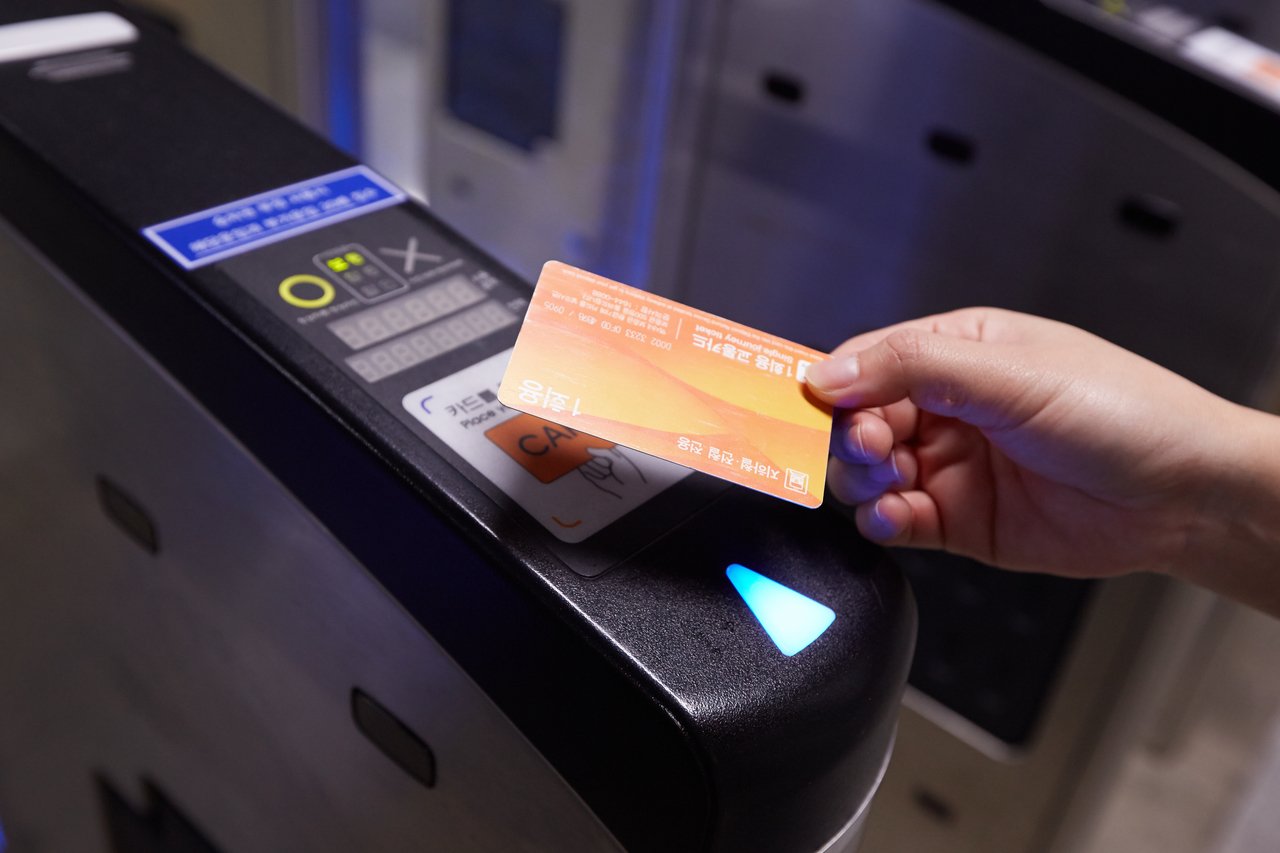
The name for this, EMV open-loop, will come up a lot between now and January, so it's worth defining once. Open-loop means the bus reader accepts your own bank card the way a London bus reader takes a contactless Visa or a New York subway gate takes a tap-to-pay Mastercard. No separate transit card, no loading it with won first, no leftover balance stuck on a card you'll never touch again after your flight home. Seoul's buses currently run the opposite, closed-loop system: T-money and K-Pass are the only cards the reader recognizes, and both have to be charged with cash or a domestic card before you board.
What Hana Card and Tmoney announced
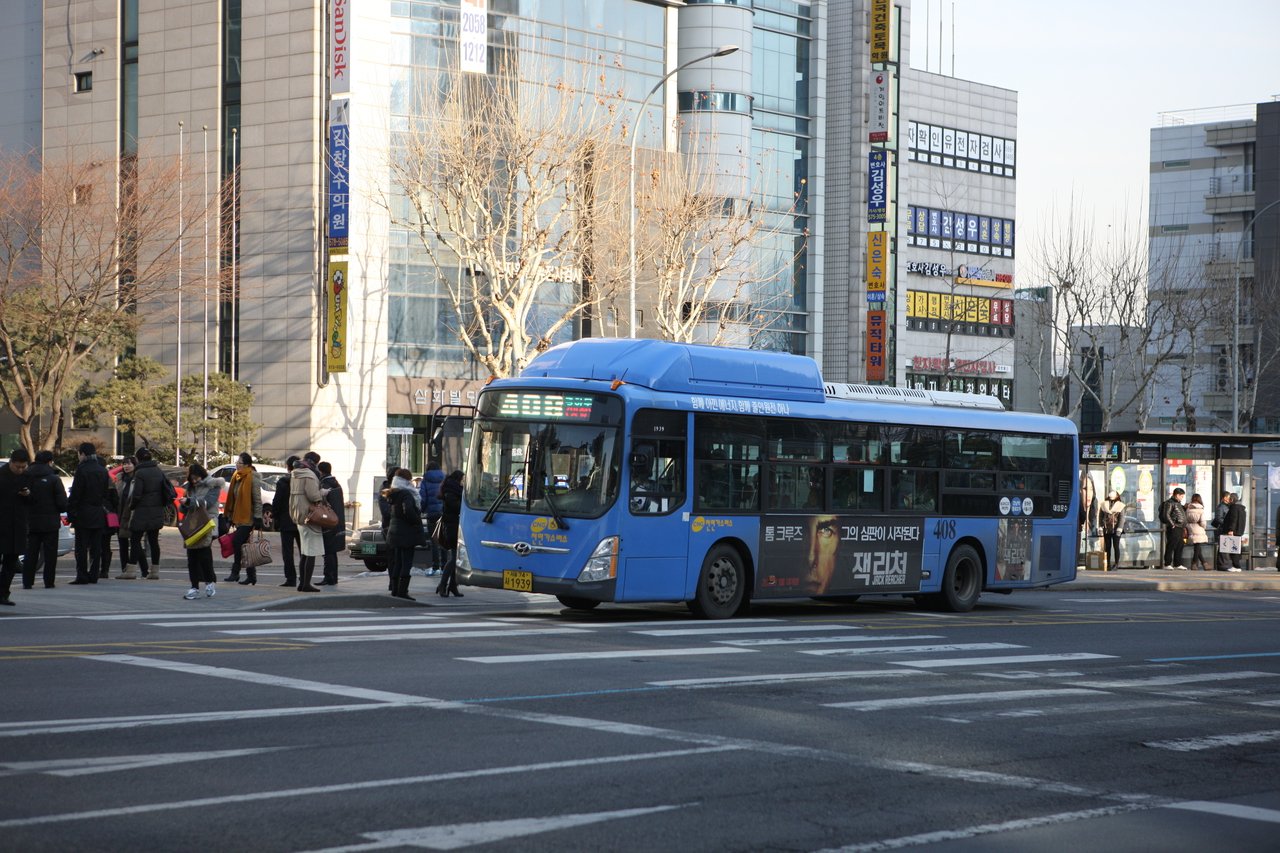
January 2027 covers city buses only, and only in Seoul. Financial Today's republished release lists the sequence after that as Incheon buses, airport buses, "서울시 산하 철도운송기관" (Seoul's own affiliated rail operators, meaning parts of the subway network), then village buses (마을버스), rolled out "단계적으로," in stages, with no dates attached to any of them. None of the four write-ups I read name a second date for what comes after buses.
Buses come first because of two numbers Hana Card put in the same announcement. Foreign arrivals from January through May 2026 hit 8.72 million, up 21.0% on the same months last year; foreign-card spending in Korea topped ₩10 trillion (about $7.3 billion at a recent rate near ₩1,366 to the dollar, Sept 21) in the first half, up 50.8%. Hana Card is also projecting roughly 500,000 foreign riders a month once the bus rollout is live. Nobody has actually ridden this system yet, so treat that figure as a company estimate.
The plan behind the plan
This isn't a Hana Card side project. Seoul's transport office announced the broader open-loop push back in October 2025, and it's the one that actually names the subway. Khan quoted the city's transport bureau chief, Yeo Jang-kwon, putting it plainly: "서울은 이제 세계인이 찾는 관광도시인 만큼 교통 결제 환경 또한 국제 수준으로 개선해야 한다" — Seoul, now a city the world visits, needs a fare-payment system that matches that. The city set that plan's timeline at 2025 through 2030, covering 19 transit operators under the capital region's integrated fare system, at a terminal-replacement cost it put at ₩50 billion or more (about $36.6 million). Hana Card's January 2027 bus launch is the first piece of that five-year plan to get an actual date.

Hana Card's own CEO, Sung Young-soo, framed the bus deal the same way in the September 22 announcement: "외국인 관광객이 신용카드 한 장으로 보다 자유롭게 이동할 수 있게 되면 그 자유가 지역 골목상권과 소상공인의 매출로 이어질 것" — when foreign tourists can move more freely with a single credit card, he said, that freedom turns into sales for neighborhood shops and small businesses. That's a company quote, framed as a tourism pitch. Foreign card spending in Korea is already up more than 50% this year, and that number is real regardless of who is saying it.
What changes for you, and when
Nothing changes before January 2027. If your trip lands before then, buy a T-money card or K-Pass the way every current guide already tells you to. A physical card works from any convenience store, or load T-money straight into Apple Wallet if your phone supports it. After January, if your card is Visa, Mastercard, UnionPay, or JCB, you can tap it on a Seoul city bus like you would in most cities with contactless transit fares already. The subway is not part of the January launch, though it already has a smaller piece of this: since March 17, 2026, the newer ticket machines at Seoul's 273 subway stations (Lines 1–8) take a foreign Visa or Mastercard to buy or reload a single-ride ticket or Climate Card — that's a foreign card buying you a T-money-style ticket, not standing in for one the way the bus system will from January. Tap-to-pay on the subway itself is still somewhere inside that 2025–2030 window with no bus-style hard date, so keep using T-money or K-Pass underground even after the buses switch over.
One thing worth flagging: whether tapping a foreign card gets Seoul's integrated transfer discount, the one that keeps a bus-to-subway change under 30 minutes from charging you a second full fare. A Seoul transit guide puts that window at 30 minutes (60 minutes overnight, 9 p.m.–7 a.m.) and caps it at four transfers — and it answers the discount question directly: domestic transfer discounts run on Korea's own "PayOn" settlement format, foreign cards run on the EMV format, and the guide says full open-loop transfer-discount support isn't expected until sometime after 2027, once terminal and settlement-system upgrades are finished. None of the four Hana Card write-ups I read address it, but going by this guide, a multi-leg day of bus-then-subway-then-bus should stay cheaper on a K-Pass than on a bare Visa even after January 2027 — I'd still check Hana Card's own site closer to launch, since this is a travel guide's reading of the rollout rather than an official statement.
Is switching worth it, or is T-money still easier?
Do the arithmetic before you decide anything. Seoul's basic card fare for a regular city bus is ₩1,500 (about $1.10), per the city's own consumer price page. Most major card issuers charge somewhere between 0% and 3% on a foreign transaction, which on a single ₩1,500 tap comes to a few cents. The real case for switching is skipping the T-money purchase and top-up line entirely, and never carrying home a plastic card with ₩1,340 stranded on it you'll never spend. For a short trip with light bus use, that's a real convenience. For a trip that leans on the subway, or on transfers, T-money and K-Pass are staying the more useful card for a while yet. Seoul Metro's own launch window still doesn't have a month attached to it.
This is a running series, not a one-off post — a new post goes up every day, at around 5pm Korea time.
About · Contact · Privacy Policy
Read next: T-money vs K-Pass: Which Seoul Transit Card Should Tourists Buy · Seoul's #1 'Local Favorite' Restaurant? McDonald's · Incheon Airport's Chuseok Crush Splits Across Two Days


Comments
Post a Comment